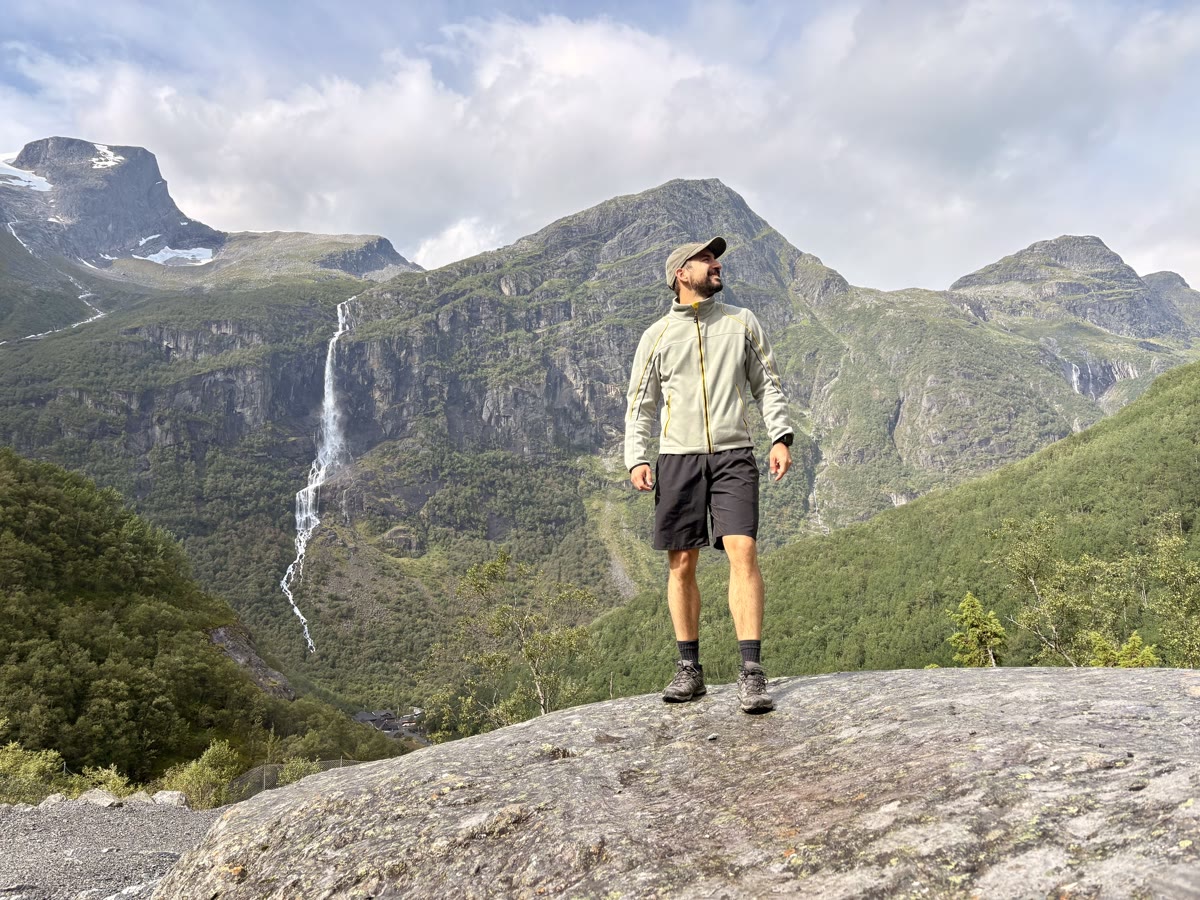
Simon Bastide
data engineer · Cévennes, France
Abstract
Data engineer. I came to data during my PhD, trying to process human movement recordings that were too large and too messy for the tools I had - and that problem turned out to interest me more than the research question itself. Since then I have moved one step upstream at every stage: from analysis to data, from data to infrastructure, from infrastructure to how organisations actually work. Since late 2026 I have been building IOTA, in the Cévennes.
Keywordsdata engineering · automation · systems · applied AI · biomechanics · Cévennes
1Position
A biomechanics PhD produces messy data. Drifting sensors, noise, artefacts, volumes that will not fit through the lab’s tools. I spent a great deal of time building what was needed to process it, and realised that this work interested me more than the research subject.
It never stopped. At a consultancy, the models were waiting for the data to become usable. In a small company, the analysis was waiting for an infrastructure to exist - you cannot do data science before doing the data engineering. Today, automation is waiting for someone to understand how the organisation really runs.
What I like, underneath all of it, is building systems: code, automation, organisations that run properly. I like well-ordered organisations; I am not especially well-ordered myself.
All automation is data manipulation.
2Background
| Period | Context | Work |
|---|---|---|
| 2017–2021 | PhD in biomechanics - Université Paris-Saclay | Human movement measurement (EMG, force sensors, motion capture); processing large volumes of noisy data |
| 2021–2023 | Akkodis (consultancy) - Toulouse | Data science on industrial data, assignments for Airbus |
| 2023–2026 | Ergosanté - Cévennes | Data engineering and data science; applied biomechanics |
| 2026 - | IOTA - Cévennes | Co-founder. Automation, data and AI for small businesses and local government |
3Method
These rules come from practice. Mostly they exist to stop me from building too early.
- 3.1A request is not a problem.
- 3.2A tool is never a goal.
- 3.3No solution before understanding the real process.
- 3.4Any problem worth solving has a measurable consequence.
- 3.5Remove before automating.
- 3.6The simplest solution that works wins.
- 3.7Concluding that nothing should be built is a valid outcome.
The solution space, in order. Stop at the first rung that holds.
remove change the process standardise give them a tool automate data / AI
3.8Deciding under uncertainty
A good decision can produce a bad outcome. So I look less for the decision that guarantees success than for the one that maximises the odds given what I know. In practice: know my maximum loss, prefer what is reversible, and test small before committing.
4Current work
IOTAWe help businesses and local government find where they lose time, money or reliability, then build the simplest thing that fixes it. Automation, data, AI where AI is the right lever - and sometimes no technology at all.